
Sintered NdFeB Magnet
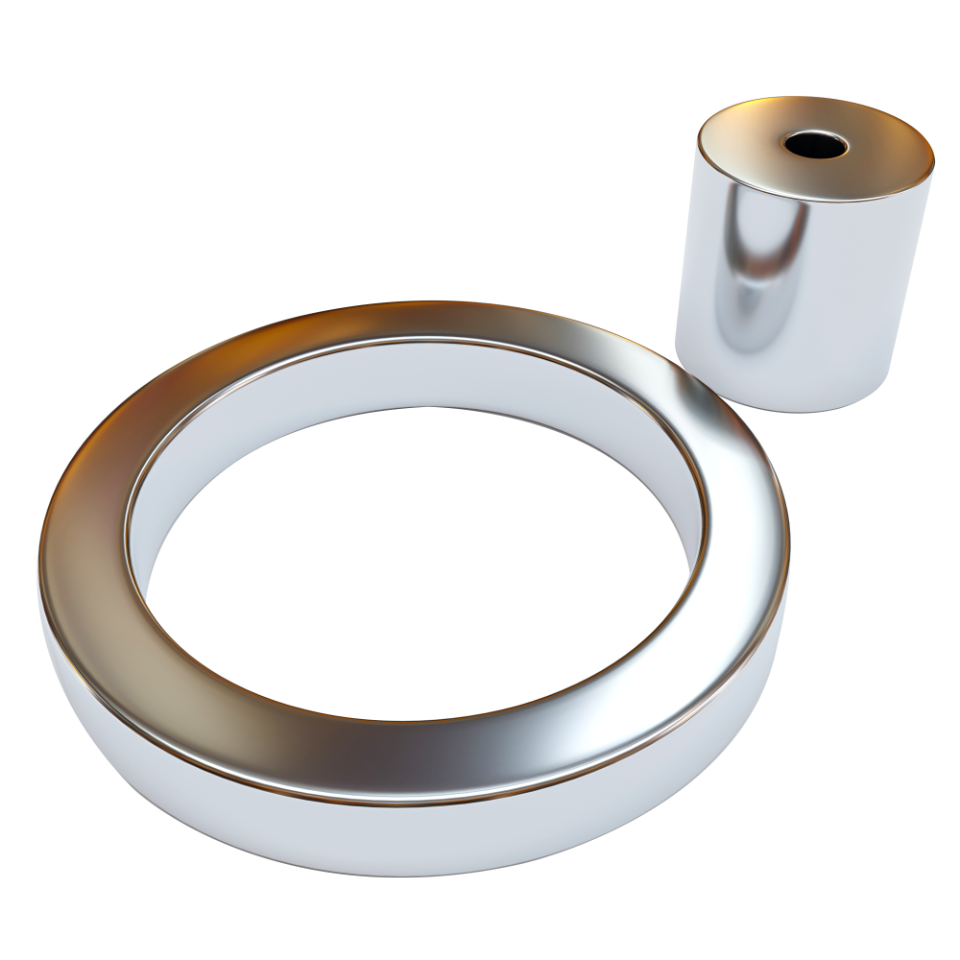
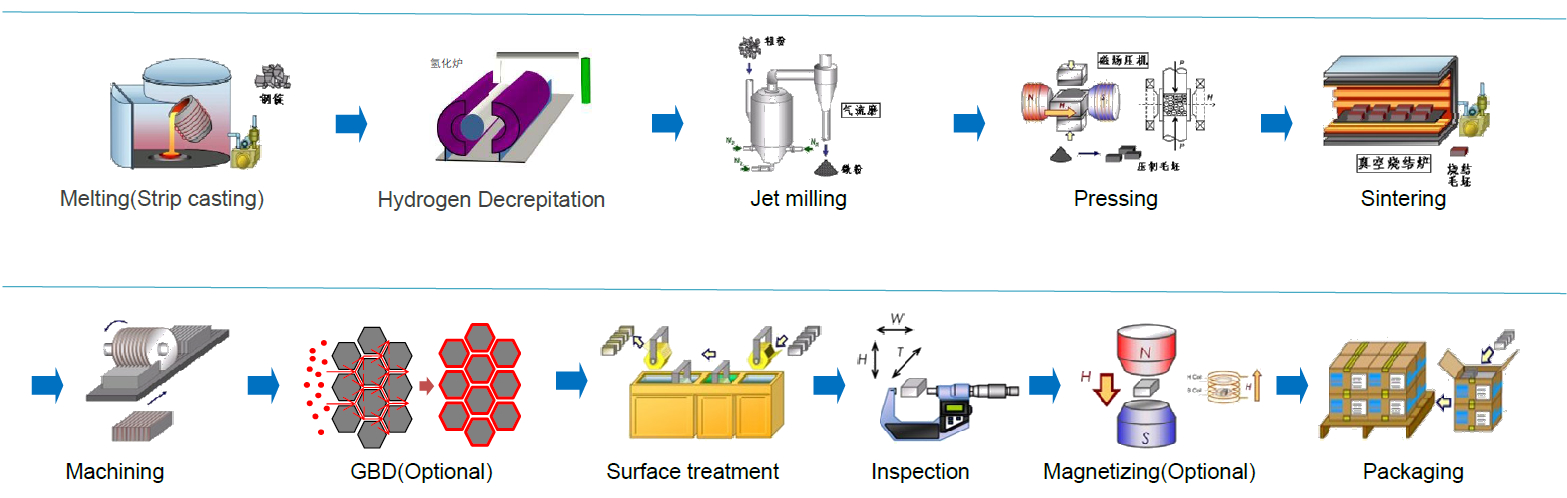
Sintered NdFeB, the world’s strongest magnetic permanent magnetic material with extraordinary magnetic properties, is widely used in the areas of Aerospace, Automotive industry, Industrial motors, Electronics, clean energy, etc. Mainly consisting of Nd2Fe14B, the magnet has an extremely high magnetic property with a maximum magnetic energy product (BH)max that is ten times higher than Ferrite and a maximum working temperature of 250℃.It also demonstrates good mechanical properties and is adaptable to various machining methods such as grinding, linear cutting and drilling. Due to its poor corrosion resistance, its surface needs to be coated (i.e., coating of Zn, Ni, Au and Epoxy) based on different requirements.
| Document | |
|---|---|
| Magnetic properties | Download |
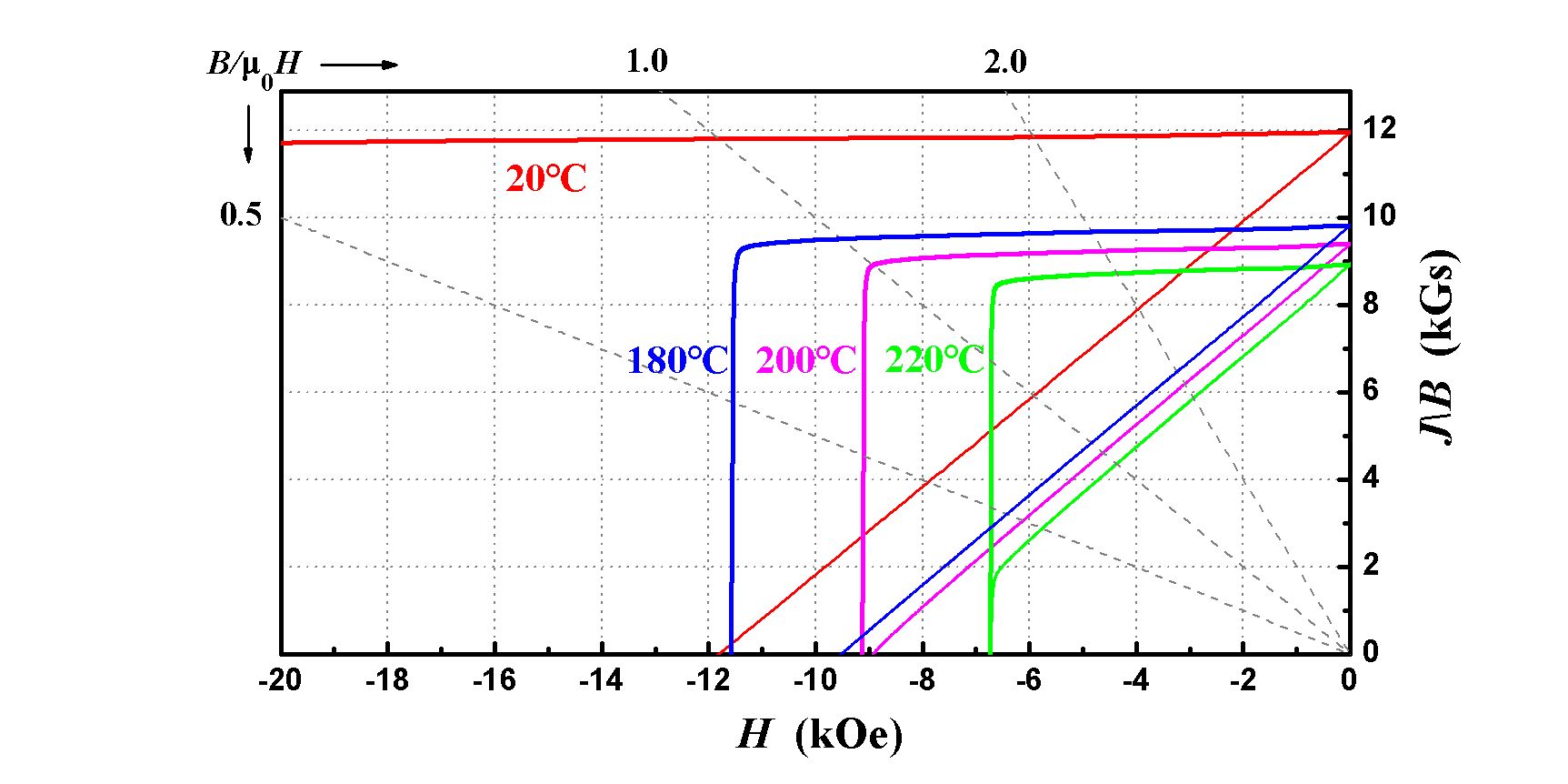
Demagnetization curves of TH series products at different temperatures
35TH
38TH
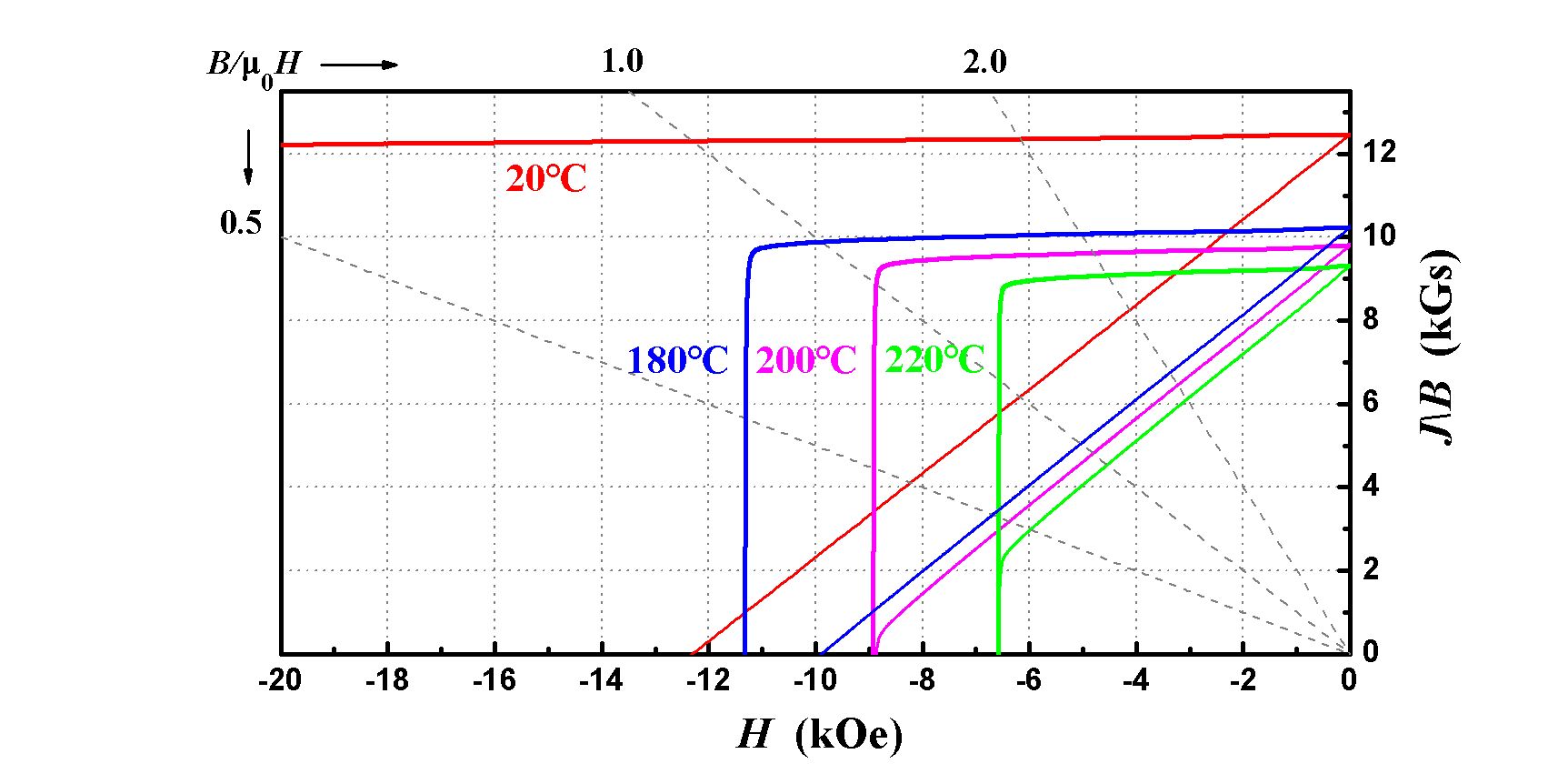
Irreversible loss of magnetic flux (typical) versus temperature for 38TH at different operating points.
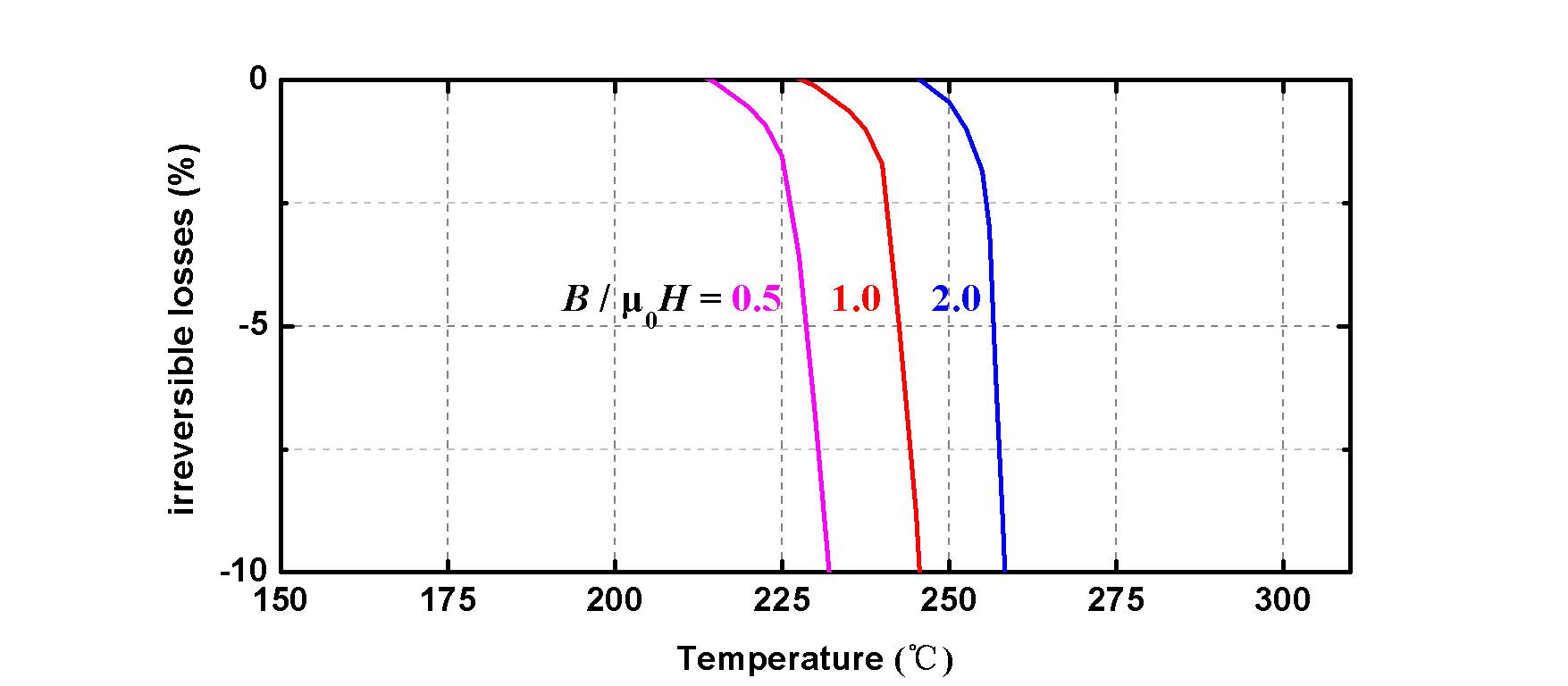
Demagnetization curves of EH series products at different temperatures
38EH
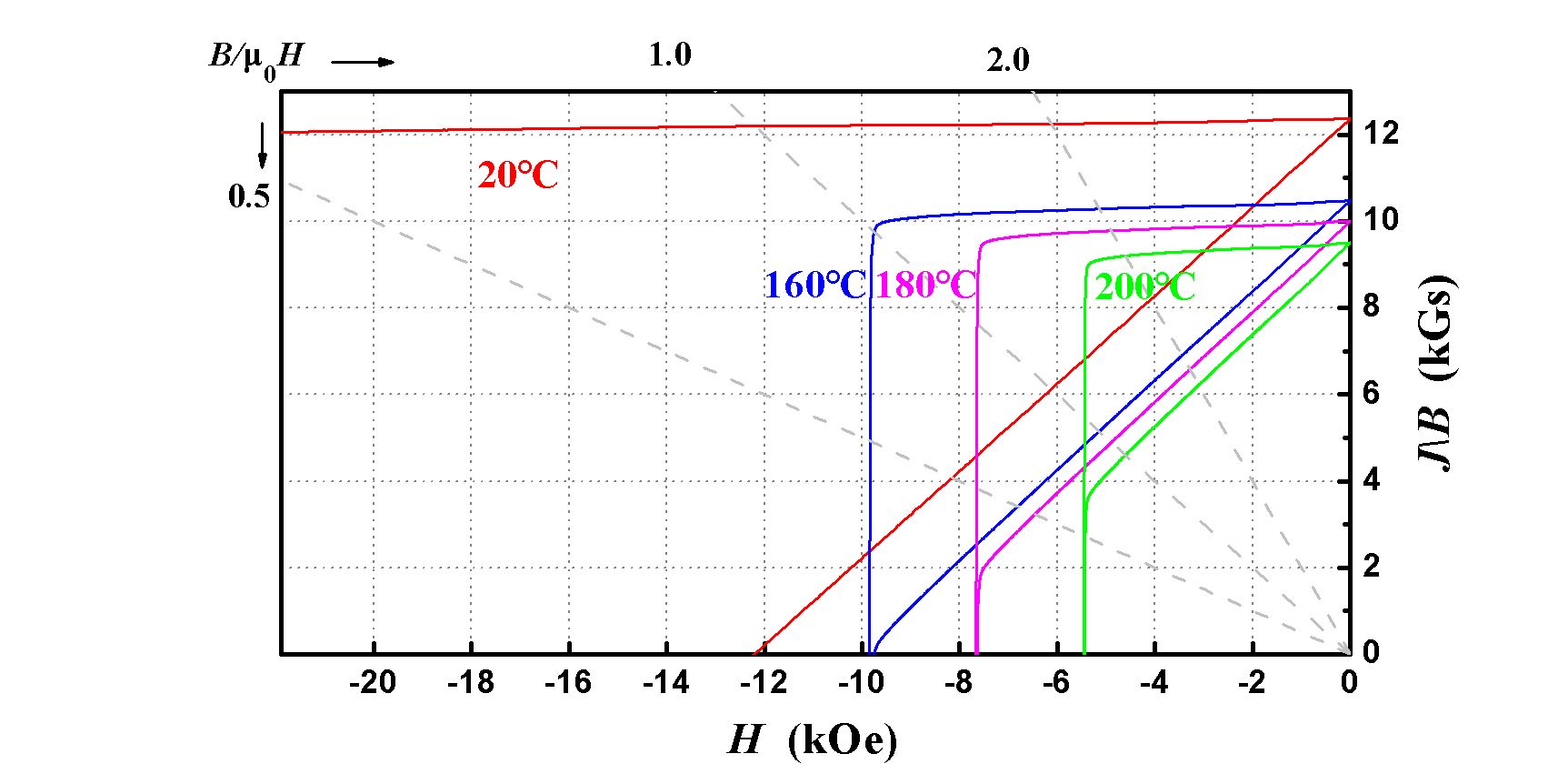
40EH
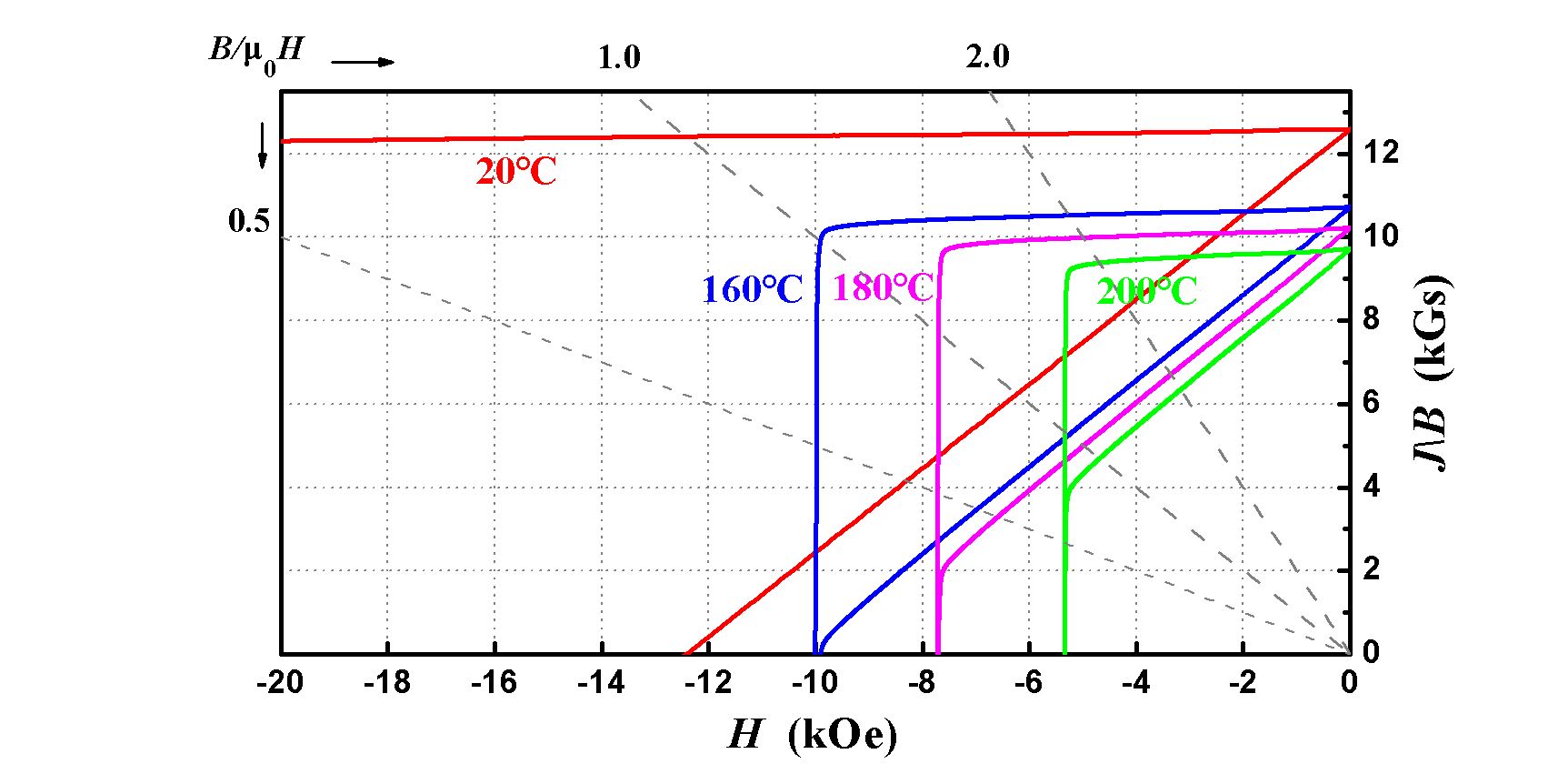
Irreversible loss of magnetic flux (typical) versus temperature for 38EH at different operating points.
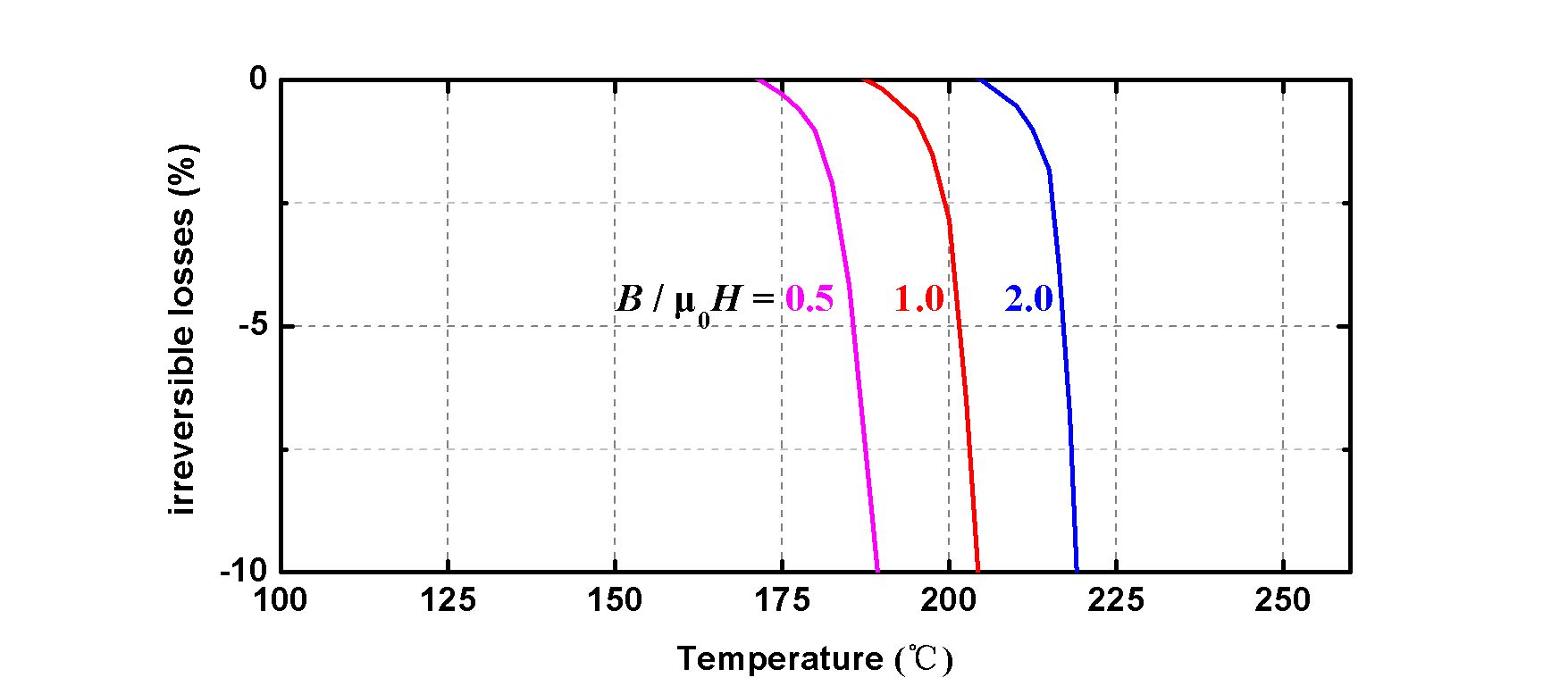
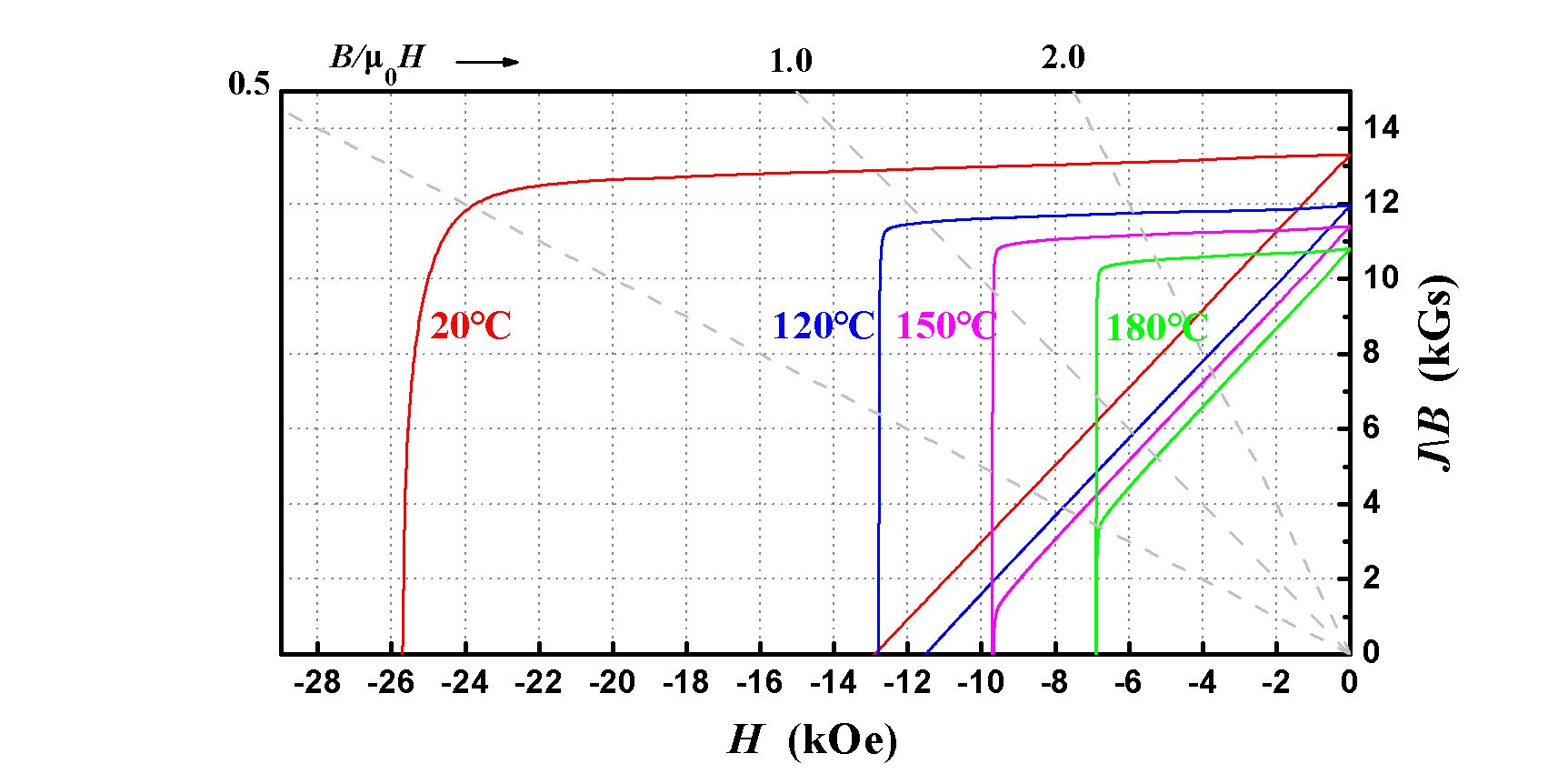
Demagnetization curves of TH series products at different temperatures
42UH
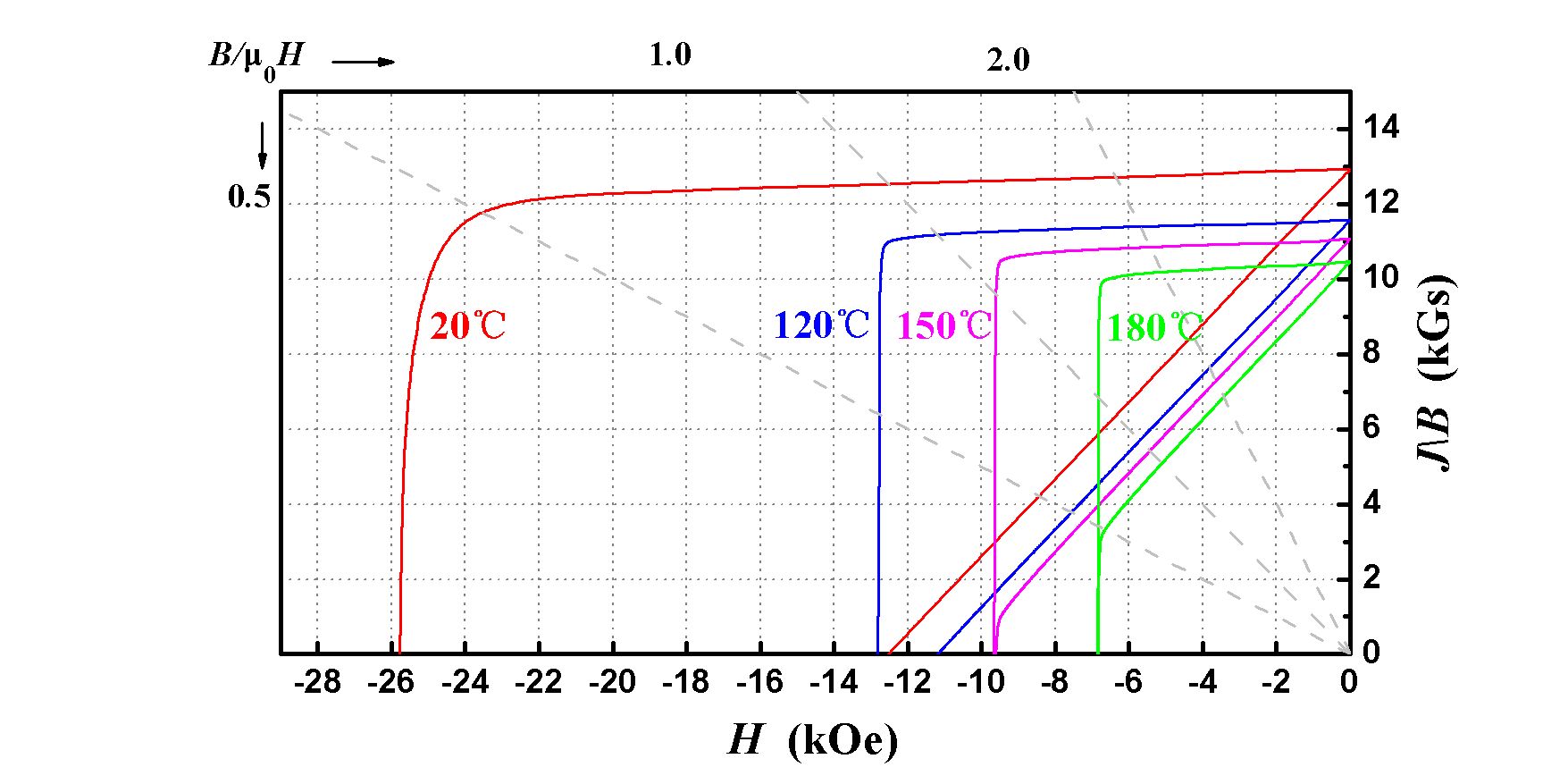
45UH
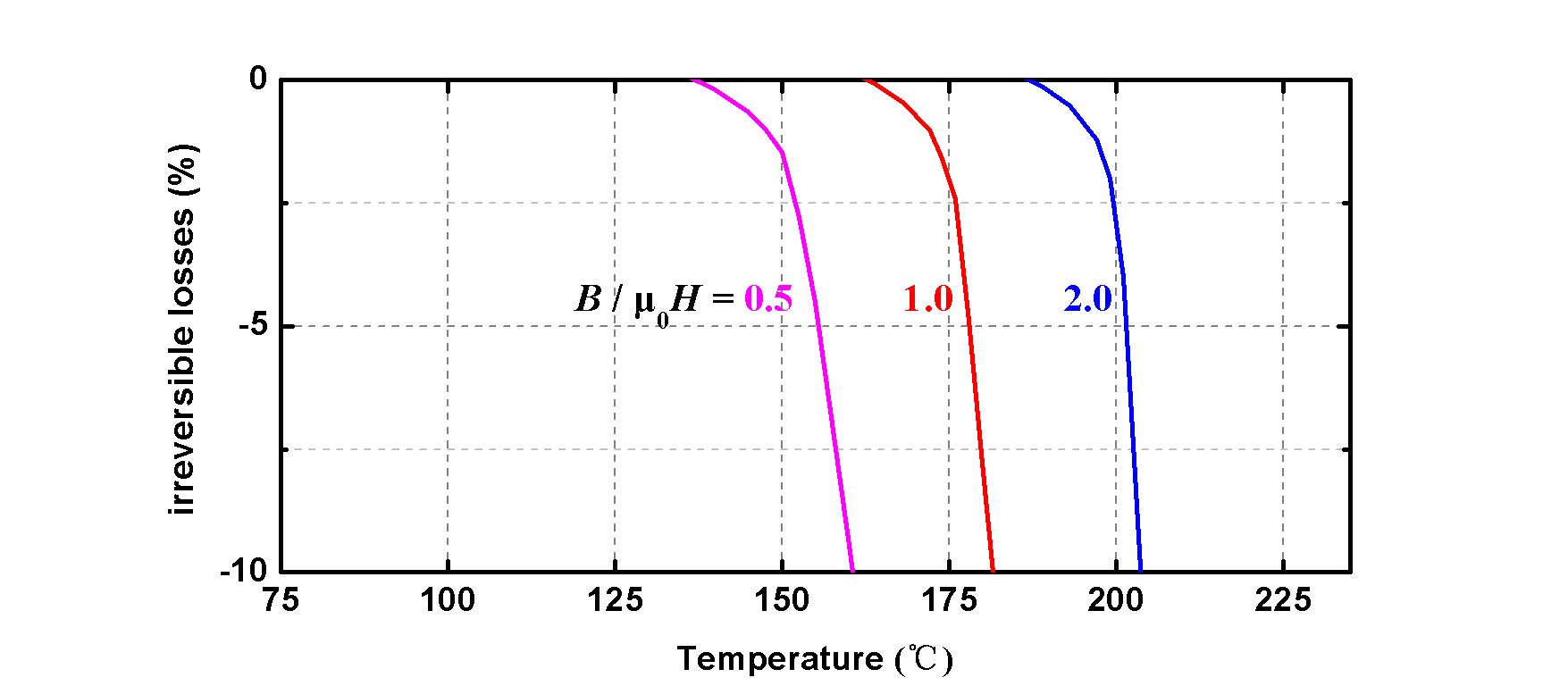
Irreversible loss of magnetic flux (typical) versus temperature for 42UH at different operating points.
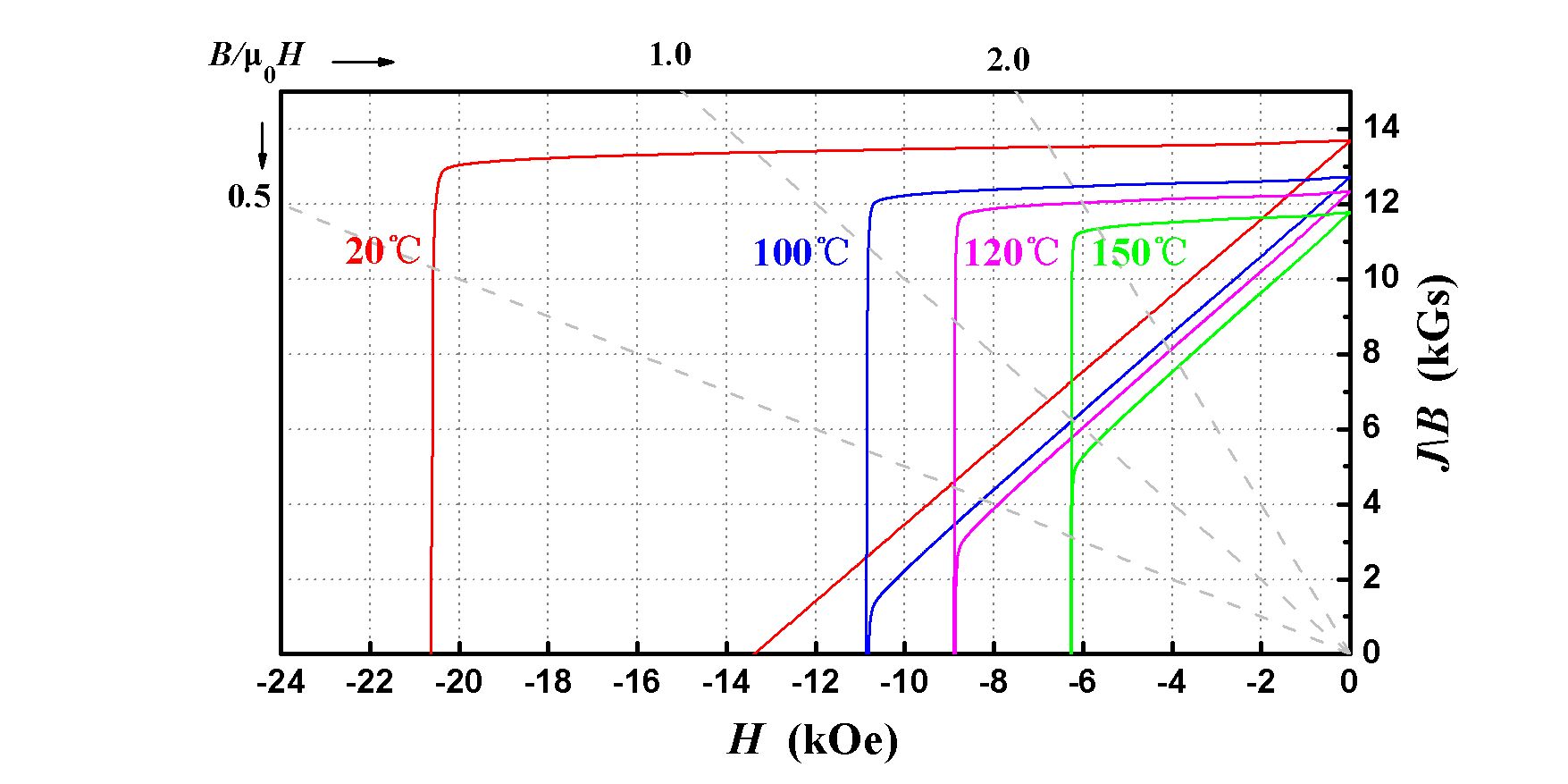
Demagnetization curves of SH series products at different temperatures
45SH
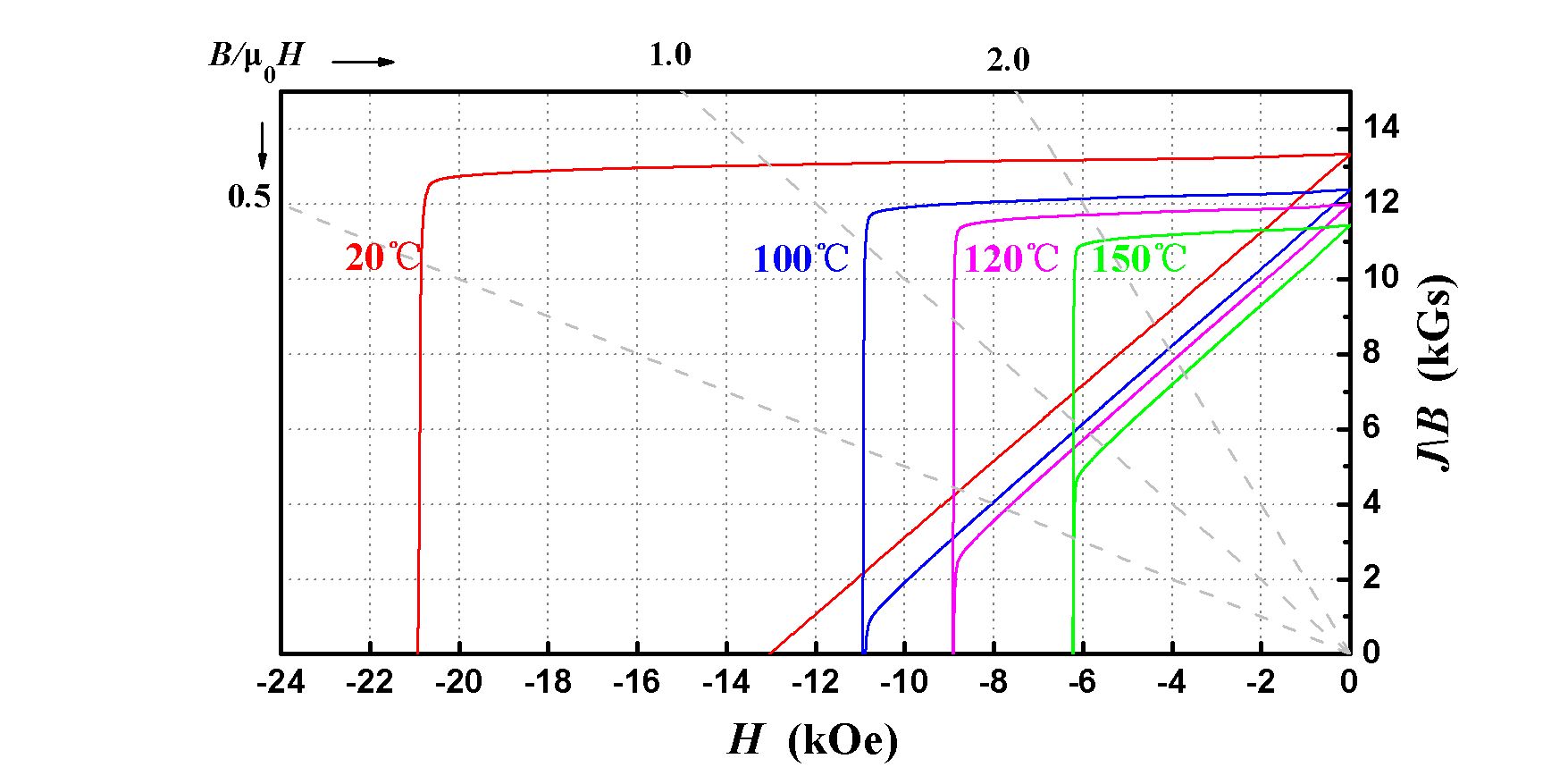
48SH
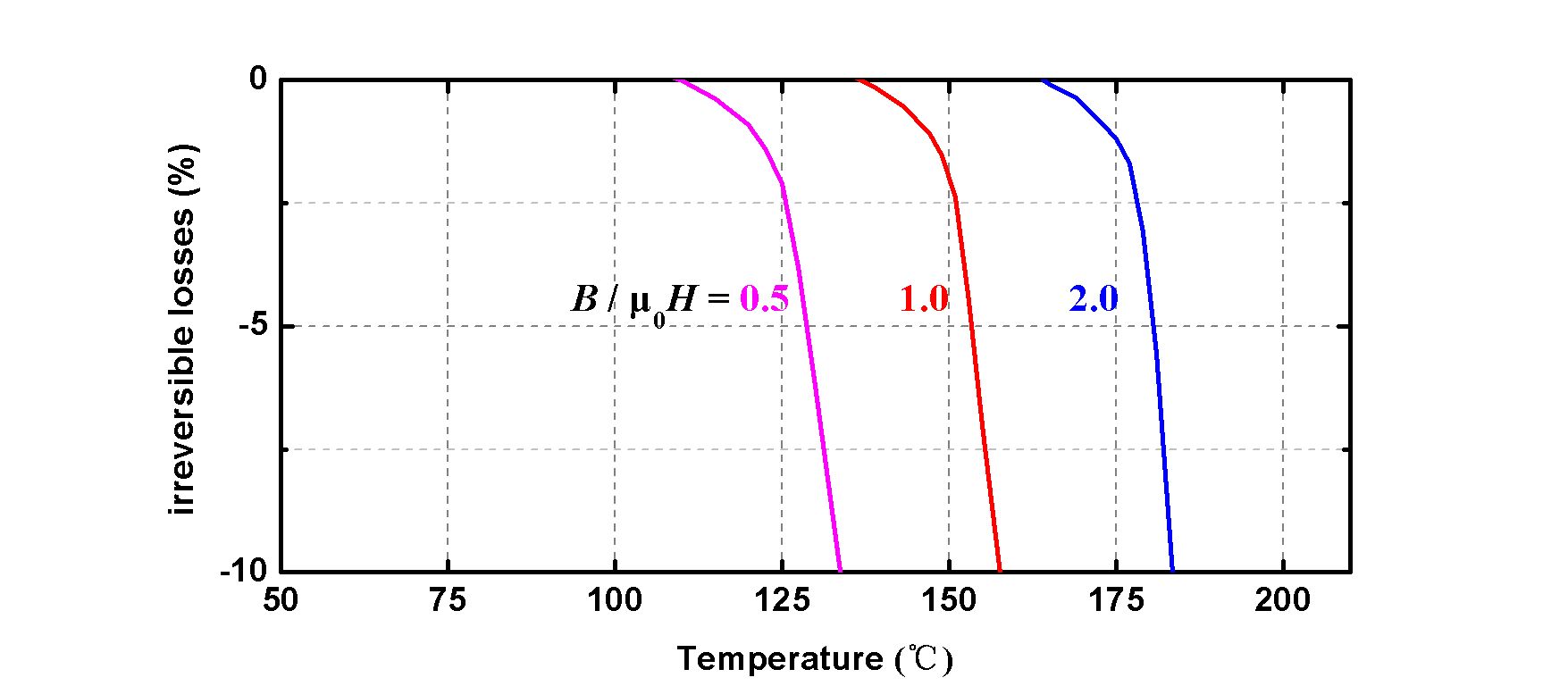
Irreversible loss of magnetic flux (typical) versus temperature for 45SH at different operating points.
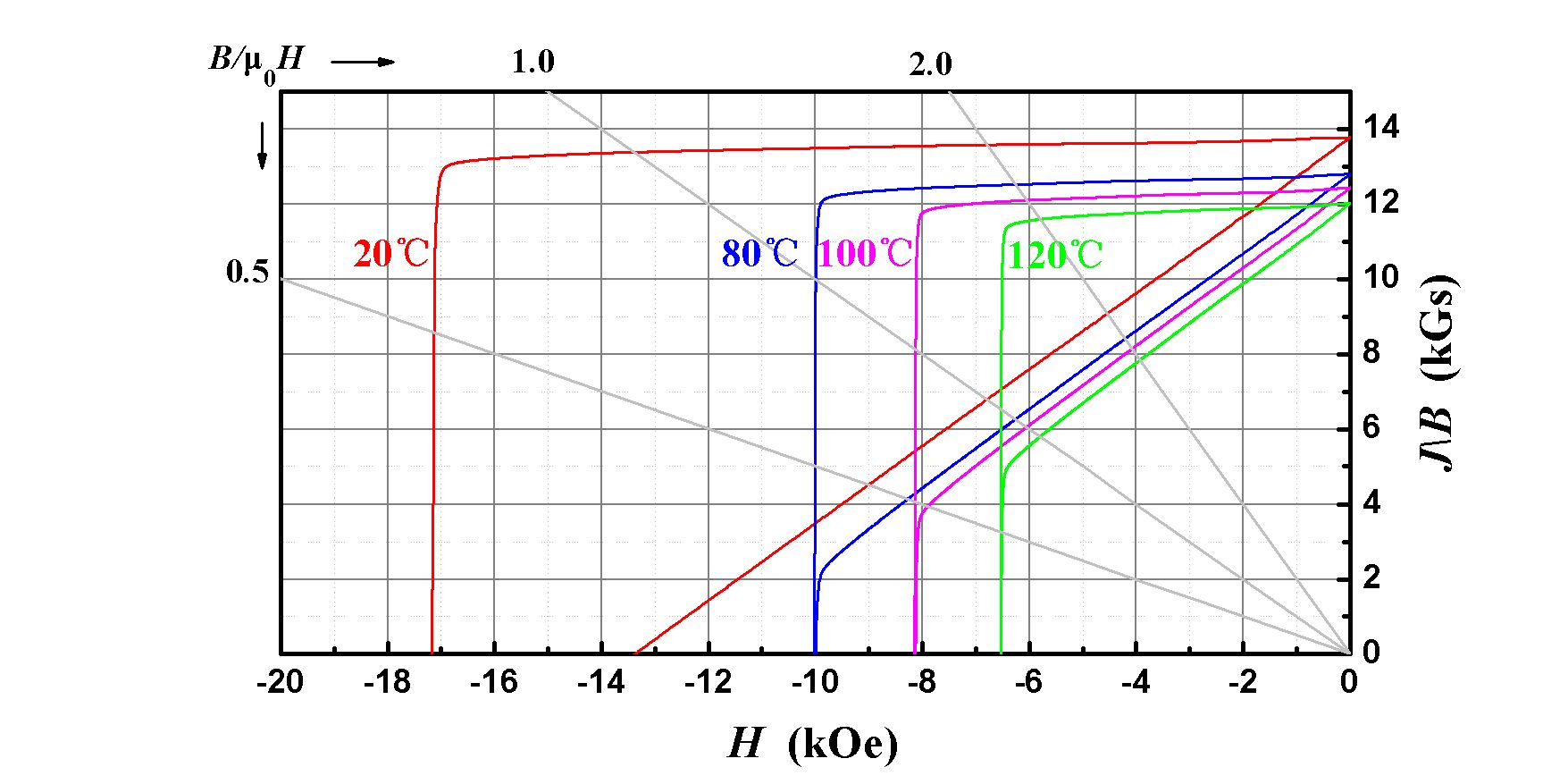
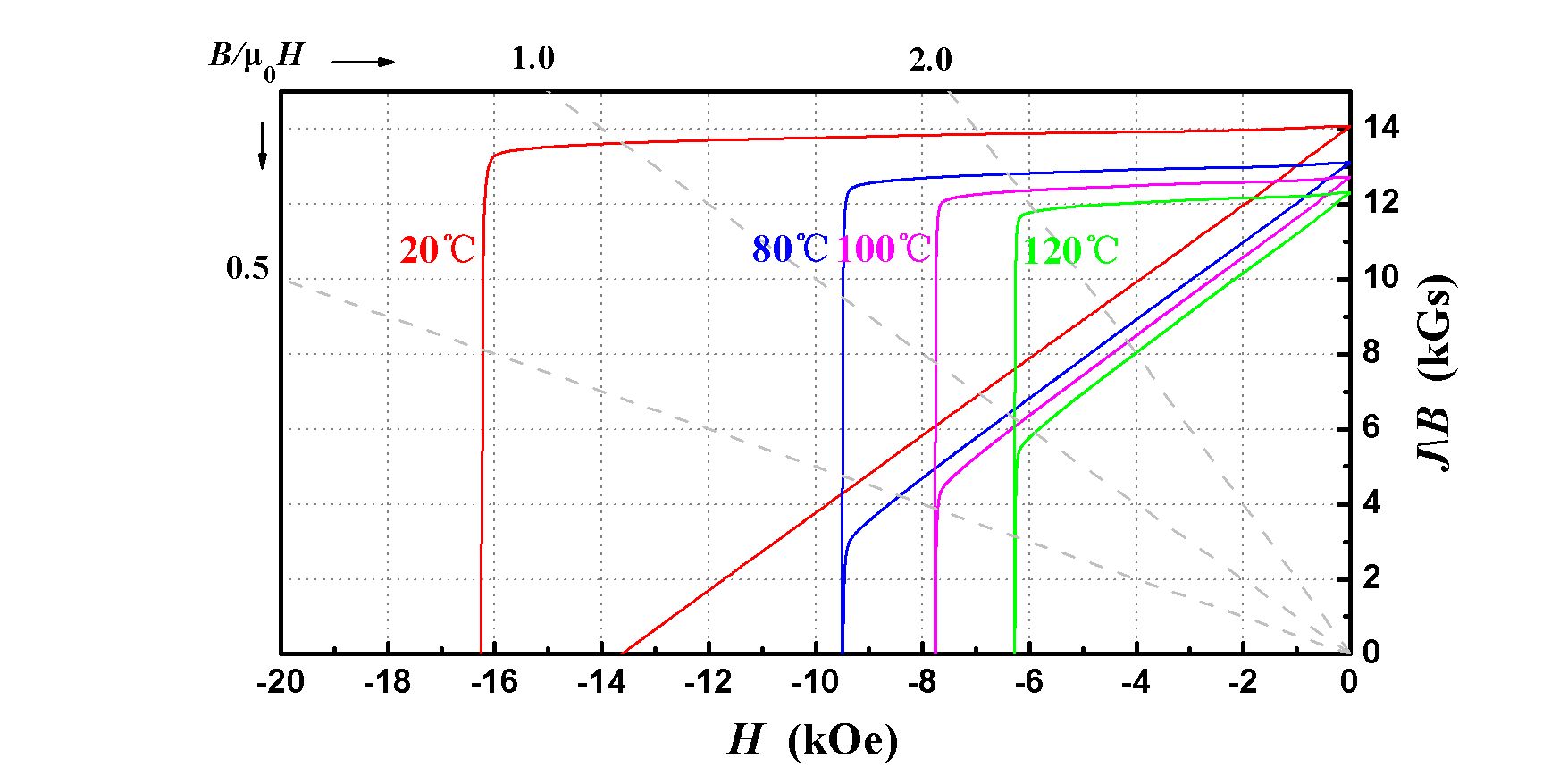
Demagnetization curves of H series products at different temperatures
48H
50H
Irreversible loss of magnetic flux (typical) versus temperature for 48H at different operating points.
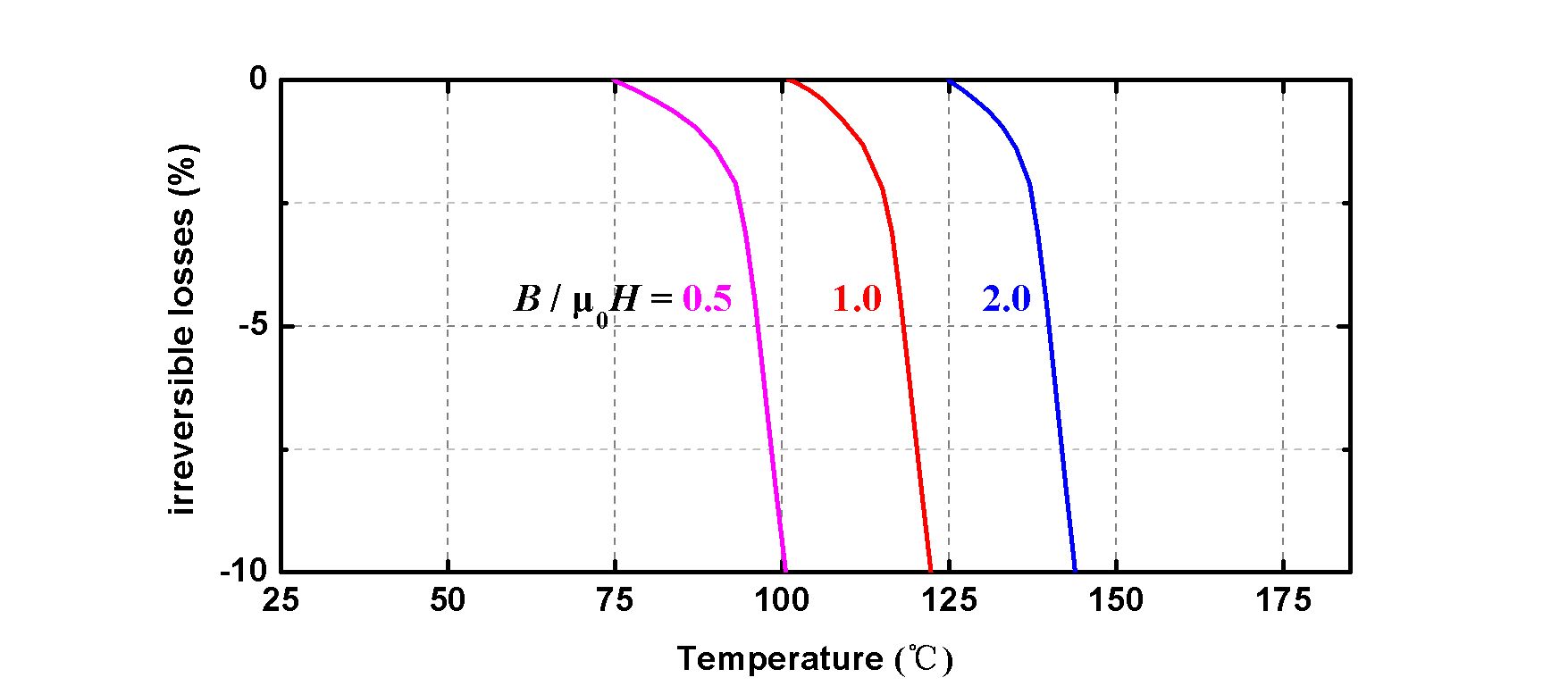
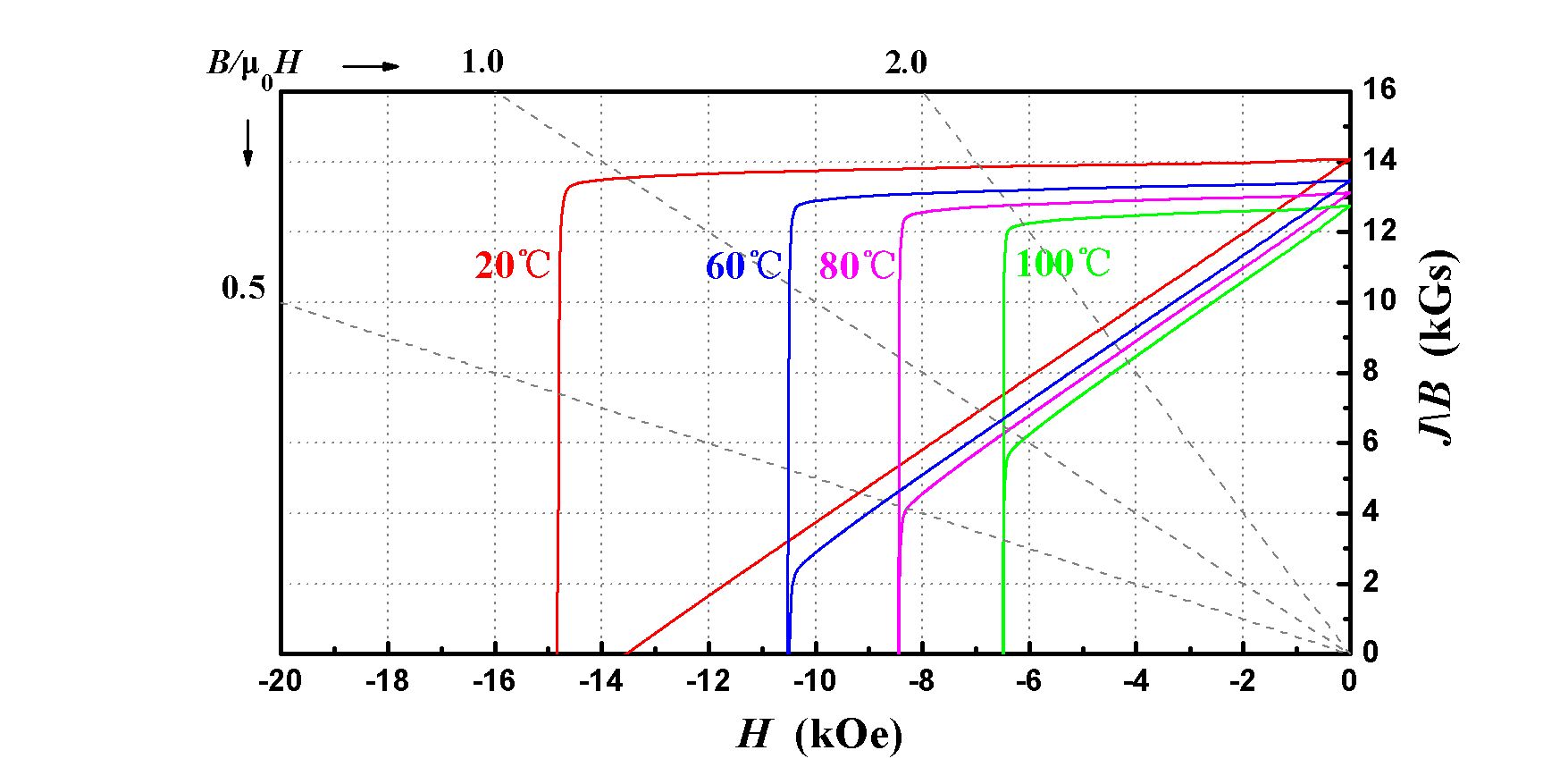
Demagnetization curves of M series products at different temperatures
48M
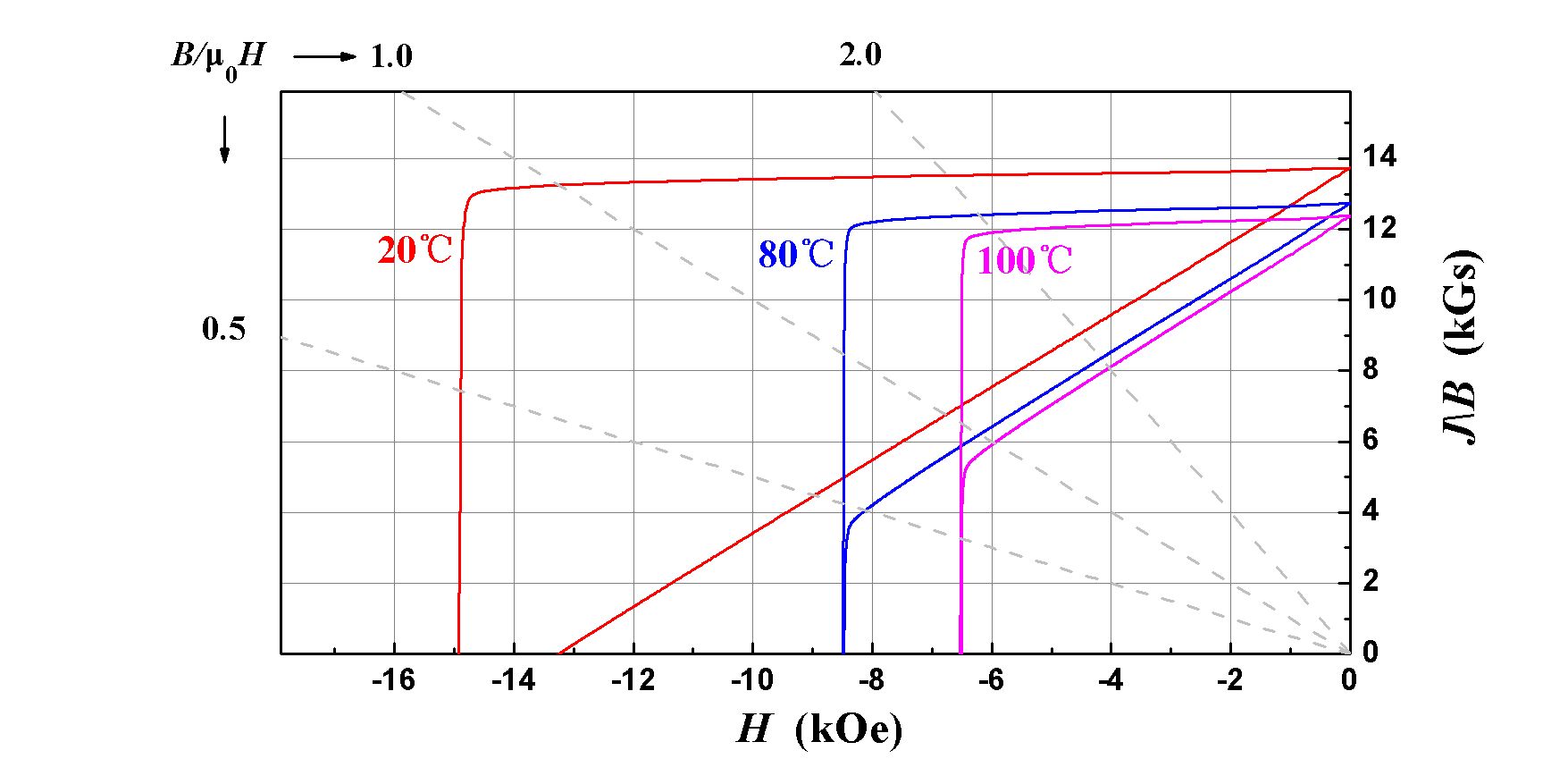
50M
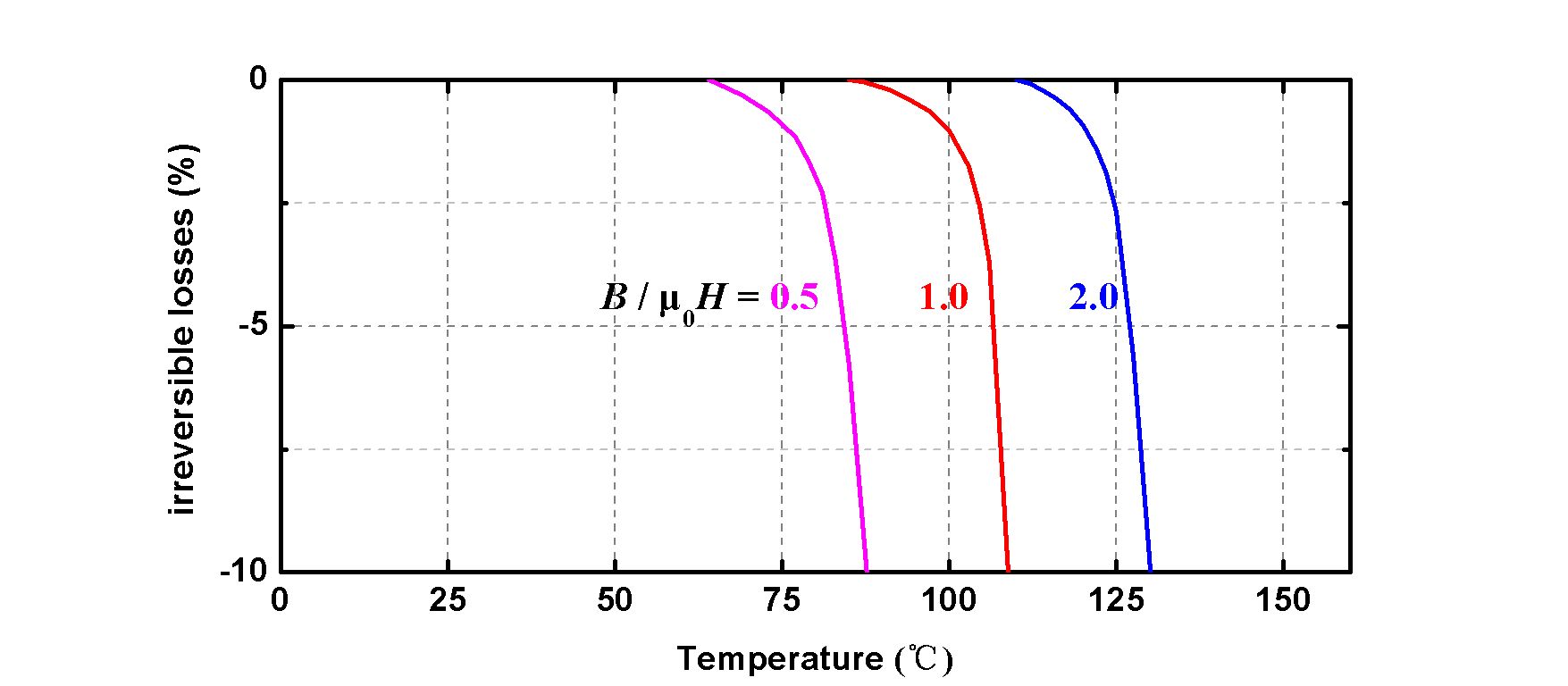
Irreversible loss of magnetic flux (typical) versus temperature for 48M at different operating points.
Demagnetization curves of N series products at different temperatures
N50
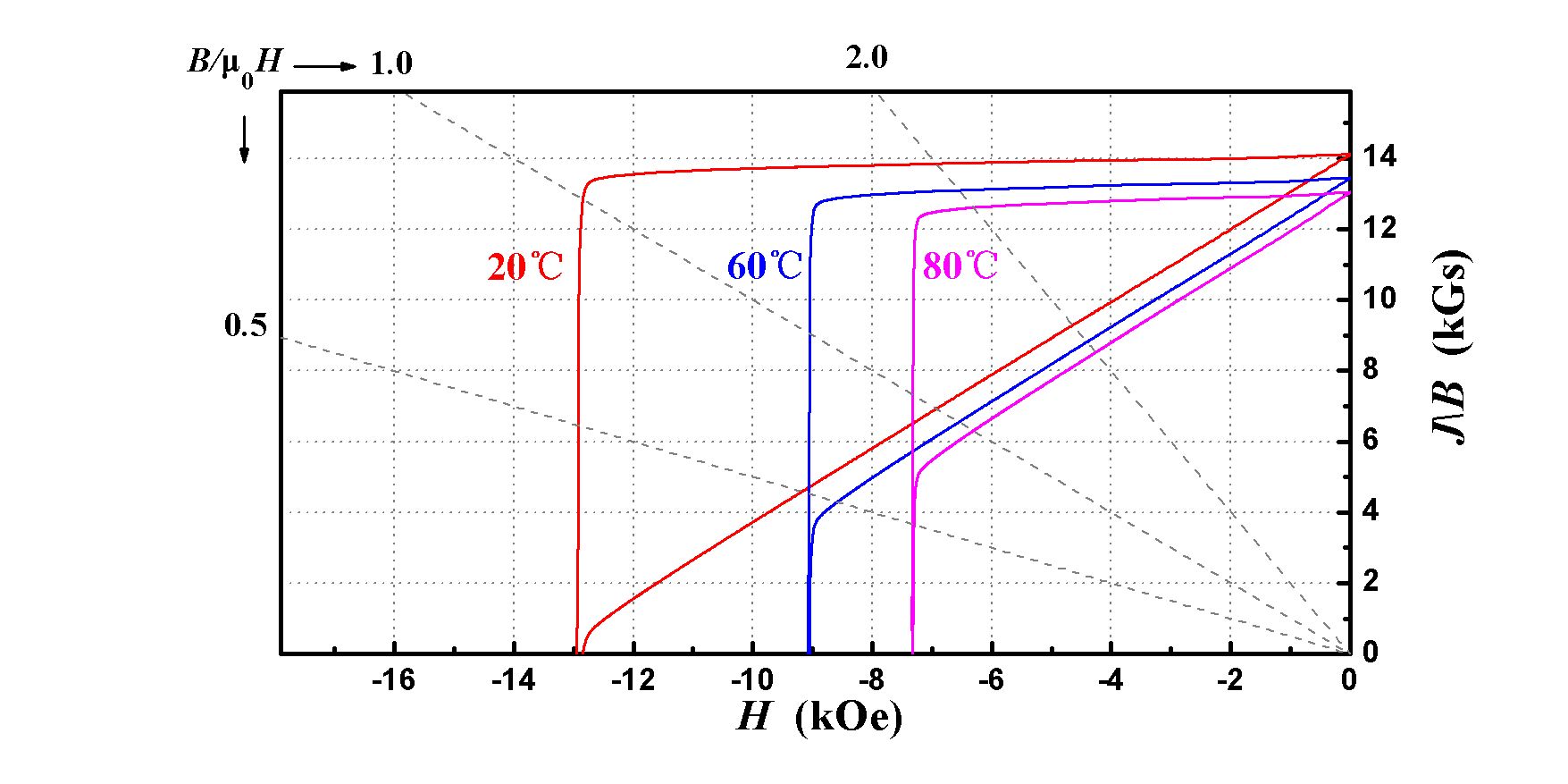
N52
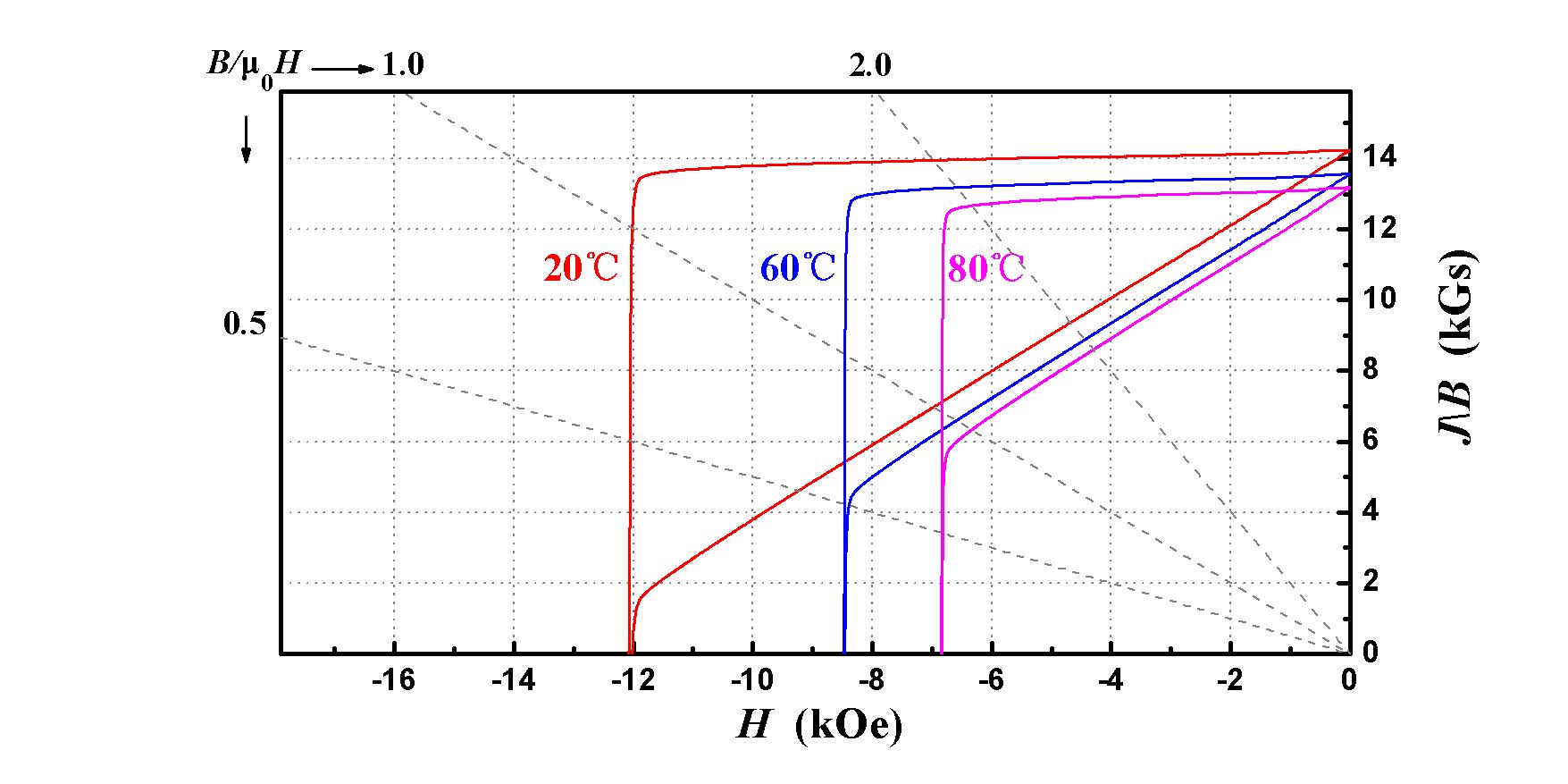
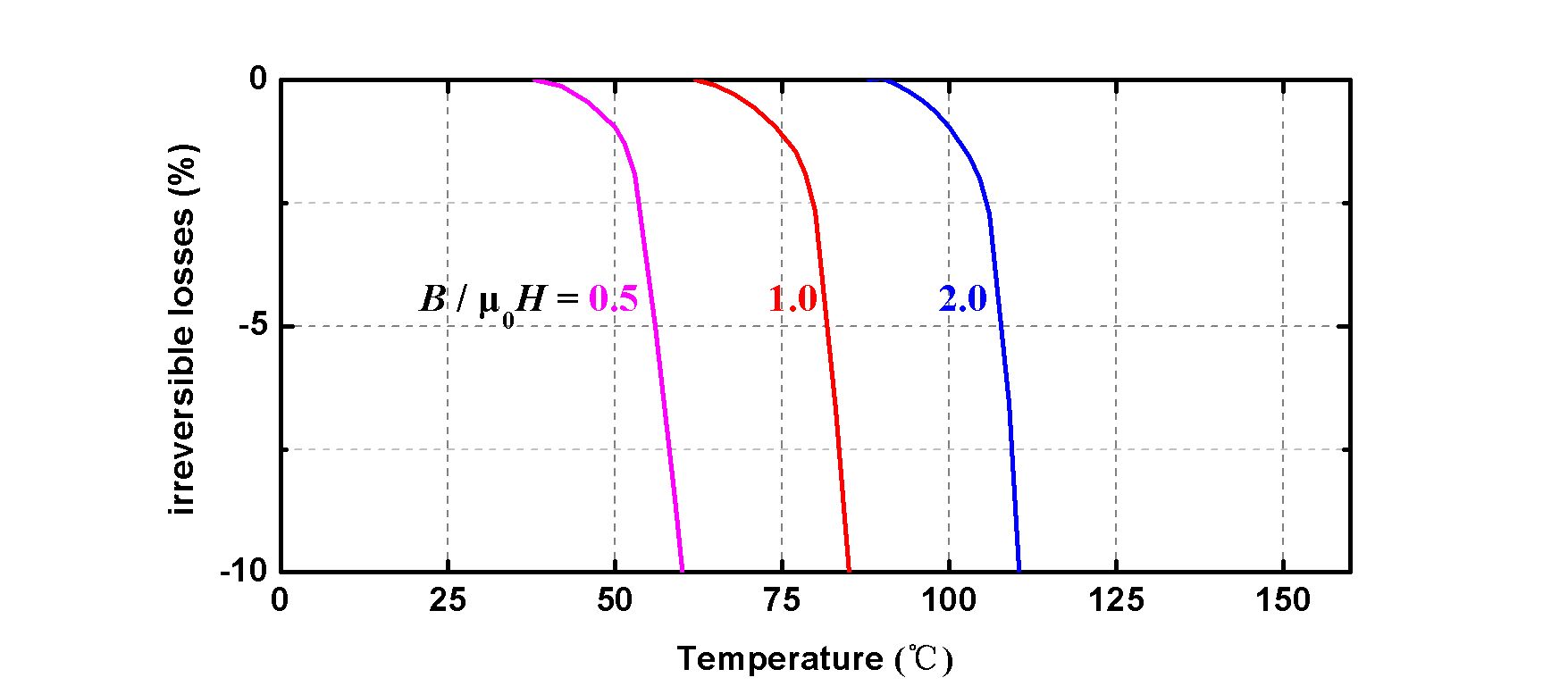
Irreversible loss of magnetic flux (typical) versus temperature for N50 at different operating points.
| Document | |
|---|---|
| Surface treatment | Download |